logo
Menu

logo
✕
  • About DOBCEL
    • About DOBCEL
    • A Message from the Bishop
    • A Message from the Executive Director
    • DOBCEL Strategy 2035
    • The Board
    • Committees
  • Our Schools
    • Our Schools
    • Our Schools List
    • Enrolments
    • Term Dates
  • Services to Schools
    • Religious Education
    • Online Learning Resources
    • Wellbeing/Diverse Learning
    • Office Services
  • Professional Learning
    • PL Program and Calendar
    • Accreditation
    • Leadership Competency Framework
    • Sponsorship
    • Early Career Teacher Program
    • DOBCEL Staff Wellbeing Guide
    • Research
  • Careers at DOBCEL
    • Current Vacancies
    • Teachers on Net
    • Graduate / Early Career Opportunities
    • International Employment
  • Catholic Education Week
  • Policies & Procedures
  • Newsletter
  • Contact Us
Back to menu

Quick Links

  • Foundation Enrolment 2027

  • Explore Our Schools

  • Catholic Education Week 2026

  • DOBCEL Strategy 2035

  • Towards 2035: A Podcast by DOBCEL

  • Newsletter Archive

  • Child Safe

  • Contact Us

  • DOBCEL IT Remote Support

Close ✕
  • About DOBCEL
    • About DOBCEL
    • A Message from the Bishop
    • A Message from the Executive Director
    • DOBCEL Strategy 2035
    • The Board
    • Committees
  • Our Schools
    • Our Schools
    • Our Schools List
    • Enrolments
    • Term Dates
  • Services to Schools
    • Religious Education
    • Online Learning Resources
    • Wellbeing/Diverse Learning
    • Office Services
  • Professional Learning
    • PL Program and Calendar
    • Accreditation
    • Leadership Competency Framework
    • Sponsorship
    • Early Career Teacher Program
    • DOBCEL Staff Wellbeing Guide
    • Research
  • Careers at DOBCEL
    • Current Vacancies
    • Teachers on Net
    • Graduate / Early Career Opportunities
    • International Employment
  • Catholic Education Week
  • Policies & Procedures
  • Newsletter
  • Contact Us

Quick Links

  • Foundation Enrolment 2027

  • Explore Our Schools

  • Catholic Education Week 2026

  • DOBCEL Strategy 2035

  • Towards 2035: A Podcast by DOBCEL

  • Newsletter Archive

  • Child Safe

  • Contact Us

  • DOBCEL IT Remote Support

  • Search
Close ✕

Quick Links

  • Foundation Enrolment 2027

  • Explore Our Schools

  • Catholic Education Week 2026

  • DOBCEL Strategy 2035

  • Towards 2035: A Podcast by DOBCEL

  • Newsletter Archive

  • Child Safe

  • Contact Us

  • DOBCEL IT Remote Support

Catholic Education Ballarat

200 Gillies St North,
Lake Wendouree VIC 3350

Phone: 03 4344 4350

  • Newsletters Archive
  • Career Opportunities
  • Awakenings
  • Diocesan News
  • Contact
  • Subscription Enquiries

Download the latest issue

ODC Cover Issue 79 Download ODC

16 September 2026 / Weekly Newsletter #111

From the Executive Director

Tom Sexton

Executive Director

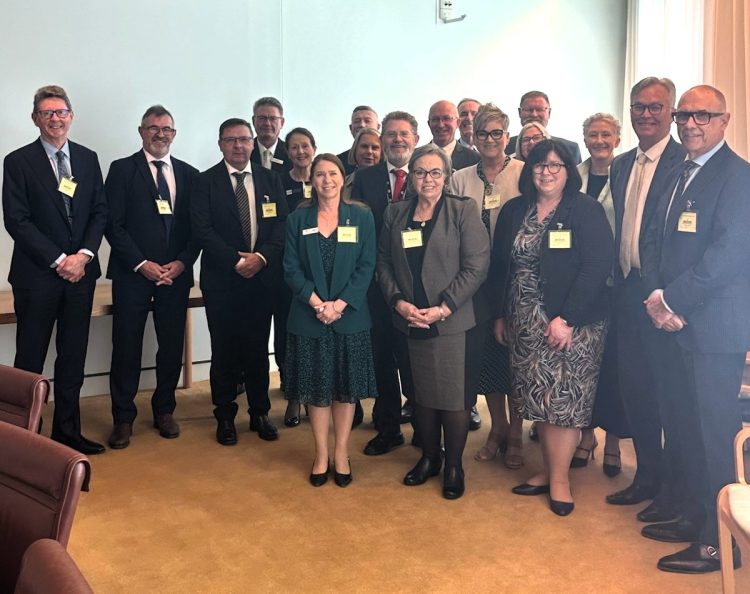
This week, I have had the privilege of joining Catholic education leaders from across Australia in Canberra to advocate for the needs of regional, rural and remote school communities. Our discussions with parliamentarians and the National Catholic Education Commission have focused on equitable funding, workforce attraction and retention, access to specialist services, leadership wellbeing and the additional challenges created by distance. By speaking collectively, we can help ensure every child has access to an excellent education, regardless of where they live.

While in Canberra, I am also participating in the Catholic Education Leaders Forum, which brings together leaders from across the country to consider the priorities shaping Catholic education. The program includes, a parliamentary reception and discussions on school funding, effective national advocacy, planning for growth, disability support, faith and excellence in Catholic education. The forum also provides opportunities to hear from Minister for Education Jason Clare MP, Shadow Minister for Education Julian Leeser MP and other national leaders, while strengthening collaboration between Catholic education systems throughout Australia.

This edition continues our reflections from DOBCEL’s recent study tour to Finland. In our latest podcast, St Patrick’s Primary School Ballarat Principal Ben Shields explores the purposeful use—and “strategic deimplementation”—of technology in education. Ben reflects on the importance of protecting children’s capacity for sustained attention, deep thinking and perseverance, while carefully considering which technologies genuinely strengthen learning. 

Emily Clarke similarly reflects on the independence of Finnish children and asks what might happen if we gave childhood a little more space. Her observations invite us to consider how allowing children to take appropriate risks, solve problems and to learn through challenges can help them become resilient, confident and capable young people.

Together, these stories encourage us to think deeply about what children and school communities need to thrive: strong advocacy, intentional leadership and the courage to reconsider familiar practices.

As Term 3 draws to a close, I extend my sincere thanks to all staff for your dedication, care and commitment throughout another busy term. I wish you and your loved ones a safe, restful and well-deserved break.


With best wishes,
Tom Sexton
Executive Director


16 September 2026 / Weekly Newsletter #111

Reflection of the week

Season of Creation (1 September 2026 - 4 October 2026)
Theme: Living Water

The Season of Creation is a time to renew our relationship with God and all creation through celebration, conversion, and commitment. This annual ecumenical season invites Christians to pray and act together for our common home.

During this “Season of Creation” we are called to immerse ourselves in the theme of “Living Waters.”

We are called to listen to the stories of those impacted by floods, storms and droughts.

The 2026 theme invites you and your community to engage deeply with those facing environmental and social challenges caused by the climate crisis. It encourages shared, immersive experiences with vulnerable and poor communities — the human face of this crisis. 

Like St Francis of Assisi, embracing the leper, encountering, "touching" their wounds can renew our hearts and reshape our story.

Prayer for Living Water

Creator God, whose Spirit hovered over the waters at the beginning, we gather as part of your community of all creation, thirsty for your grace. 
We give thanks for the gift of water, the veins of our common home, that sustains the cedar and the whale, the pasture and the city. 
We are grateful for the local waters that nourish our homelands and our fellow creatures. 
We give thanks that in your well-watered garden, every drop is a sacred testament to your love.
Yet, we confess that we have treated this gift as a mere commodity. 
We have choked the seas with our waste and watched the warming tides rise in judgment.
We lament the cracked earth of the drought-stricken and the salty tears of the climate refugee. 
Melt our frozen hearts, O God, and let the waters of repentance flow.
God of all Life, you promised that wherever the river flows, everything shall live.
Stir in us a calling to care for the waters — to protect the watershed, defend the rights of water and honour the dignity of the thirsty. 
May your Word be a spring within us, gushing forth for the healing of the nations.
May God our Creator who brought water from the rock sustain us in the desert. 
May God of Life who is Living Water refresh us for the work of restoration. 
And may the Holy Spirit carry us on currents of grace until justice rolls down like waters and righteousness like an ever-flowing stream. 

Amen.

Season of Creation Celebration Guide 2026.

Prayer for the school holidays

Let us pray for everyone who is eagerly looking forward to holidays.
Grant that a period of relaxation may provide a return to the core of our being,
to peace and quiet, to attention to the essentials, to the joy and comfort of old and new encounters.

Stay with us when we take a holiday, at home or elsewhere.
Bring peace to our hectic hearts and open our minds to enriching encounters.
Help us to gain oxygen for the work that is still to come and let us get deeper to the core of life,
so that our soul finds balance.

Loving God,
Let the awareness grow in us that all people – near and far – are our brothers and sisters.
Help us to grow every day as brother or sister of the people who cross our path and to show solidarity with them, comfort them and help them.

There are so many people in the world, with so many needs.
Following the example of Jesus, let us be open to encounter, convinced that involvement between people makes everything possible.

The most beautiful things in life are free.
We have received a lot: from you, from our family, from all the people 
who made us who we have become.
Let our hearts overflow with gratitude and help us to find rest and peace this holiday time.

Amen

Source: Thomas - Godsdienstonderwijs.be, Leuven Belgium

16 September 2026 / Weekly Newsletter #111

DS2035 Podcast

In this episode, we speak with Ben Shields, Principal of St Patrick’s Primary School Ballarat, about how stepping away from the daily demands of school leadership during DOBCEL’s recent study tour to Finland created space to reconsider the role of technology in education.

A long-time advocate for digital technology, Ben shares how his observations in Finnish schools—and a thought-provoking conversation with educator and author William Doyle—challenged some of his previous thinking. He reflects on the importance of protecting children’s capacity for sustained attention, deep thinking and perseverance, particularly during the junior primary years.

Ben also explores what he calls the “strategic deimplementation” of technology: carefully examining what genuinely strengthens learning and having the courage to remove what does not. This is not an anti-technology conversation, but a “pro-purpose” one—focused on creating rich, intentional learning experiences that help every child thrive.

Listen to this podcast episode here: https://dobcel.captivate.fm/

16 September 2026 / Weekly Newsletter #111

Stimulus

Reflections from Finland - what if we gave childhood a little more space?

Emily Clarke
Principal of St Alipius Parish School-Ballarat East

There are some things from Finland that have sat with me over the last week since my return. I came home with pages of notes, ideas about leadership and learning, education and research, conversations with educators from around the world and plenty of things I want to think about in our own context at St Alipius. But strangely, one of the things I keep coming back to is much simpler: children, and what it means to actually let children be children.

One of the things I noticed in Finland was the independence of children. I saw children walking and riding to school by themselves at 7 years of age, serving themselves lunch with real plates and cutlery, navigating their way around spaces without an adult constantly hovering around, and being trusted with responsibilities that we might sometimes be hesitant to give to children here. There seemed to be an underlying belief that children are capable. It wasn't that adults weren't caring or attentive; rather, there seemed to be a confidence that children need opportunities to do things for themselves if they are ever going to become independent. 

It has made me think about how much we do for children in our society and how we are constantly removing the roadblocks for them so life feels easier. We want them to be resilient, independent, confident and good problem solvers. We want them to cope when things don't go their way. Yet sometimes, in our desire to care for children and make things easier for them, we remove some of the very experiences they need in order to develop those qualities. We step in quickly when there is a problem, solve the friendship issue, find the lost jumper, tell them how to do something, remove the risk or fill the silence when they are bored. Most of the time, we do these things because we care. But I wonder whether, sometimes, caring for children can also mean giving them the space to struggle a little, to make a mistake, to have a go and to discover that they are actually more capable than they thought. 

I think this is something worth considering for parents and schools alike. We have gradually developed a bit of a culture of ‘rescue and fix’. As parents, it is incredibly hard to watch your child struggle, particularly when you know you could probably make the problem disappear with a phone call or an email to the teacher or principal. A child comes home upset about something that happened during the day and our instinct is often to find out what happened, contact the school and make sure it is sorted. There are certainly times when adults need to step in, and our responsibility to children should never be underestimated. But there are also times when perhaps the most helpful thing we can do is pause and ask, "Have you tried to work this out yourself? What do you think you could do?" Maybe the child needs to sit with the discomfort for a little while, have a difficult conversation, make a decision, try something that might not work or simply discover that the problem wasn't quite as big as it first felt. I don't think this is about parents caring less. In many ways, it is about trusting our children more. It is about resisting the urge to make everything okay and instead giving children the chance to experience themselves as capable.

This has also made me think a lot about play. We talk about play quite naturally when we think about young children, but somewhere along the way play seems to become less valued as children get older. It can almost become something that happens before the "real learning" begins and then once learning begins, there is no need for play. Perhaps play doesn't disappear as children grow; perhaps it just changes.

A five-year-old might spend an afternoon building an imaginary world with blocks. An eight-year-old might invent a game with complicated rules. A ten-year-old might be outside with friends, building something, making up a challenge. A twelve-year-old might play sport, create something, experiment, compete, or test themselves in ways that don't necessarily look like traditional "play". There is an enormous amount happening in those moments. Children are negotiating, solving problems, managing disappointment, taking risks, creating, communicating and figuring out how to be with other people. I think one of our problems is that we step in so often during these experiences when we sense it’s not working or not going how we would like.

I've been wondering what children learn when we don't organise the experience for them. What happens when we plan the day from the minute they get to school to the minute they go home. Then when they get home their afternoons are filled with organised activities and technology. 

A really interesting question  for me is:

What experiences of childhood are currently being displaced?

For example:

  • boredom
  • outdoor play
  • imaginative play
  • face-to-face negotiation
  • physical activity
  • tinkering
  • waiting
  • exploring
  • making
  • taking risks
  • being unsupervised

This brings me back to risk, which is probably another idea from Finland that has stayed with me. Of course, we have a responsibility to keep children safe. But I am increasingly interested in the difference between keeping children safe and removing every possible risk from childhood. They aren't the same thing. There is a difference between danger and challenge, between putting a child in harm's way and giving them an opportunity to test themselves, and between protecting a child and preparing a child for the world.

I keep coming back to the question: what are our children capable of doing that we don't give them enough opportunity to do? In Finland it was automatically assumed that ‘children can’. I feel we have slipped somewhat into the ‘children can’t’ style of thinking. When it was gently suggested that we adopt a ‘no shoes inside for Term 2 and 3’ the first initial comments related to ‘imagine them trying to get their shoes on and off!’. We slip into this deficit thinking and then we avoid the change to avoid the challenge. 

We have Scope and Sequences for all things academic, maybe we can develop a Scope and Sequence for building independence from F-6. Do we understand what children actually need at different stages of their childhood? What does play look like for a six-year-old? What does it look like for a 12 year old? What should independence look like for a nine-year-old? What kinds of risks should an eleven-year-old be able to navigate? How much adult direction do children really need? What might happen if we gave them more agency and space to create? 

I wonder what our classrooms, playgrounds and routines might look like if we started asking these questions more deliberately. Perhaps we would think differently about the environments we create, the expectations we have, the way we respond to behaviour and even the amount of time we protect for children to simply play, move, create, explore and be with one another, separate to ‘academic learning’.

And finally, the role of technology in classrooms. It was so refreshing to walk into Finnish primary classrooms and not see chromebooks all over the desks. I wonder how much the use of chromebooks inhibits the parts of childhood we want to preserve. To what degree do the use of chromebooks in the classroom minimise genuine connection and engagement between each  other. How is the continued use of screens at a young age altering the ability to attend and focus? What would it look like if we went back to teaching without the use of a chromebook? So much to think about. 

I have enjoyed the struggle of pondering these thoughts over the last week without actually having the answer. I'm wondering whether, in our effort to prepare children for the future, we sometimes forget that they are living their childhood right now. Perhaps our job isn't only to get them ready for what comes next, the next progression point on their report, the next assessment, the next year level. Perhaps part of our job is to give them the space, freedom, challenge and trust to truly be present in their childhood (without us hovering around so much and without them staring at a screen as often as they do!). 

My final questions that I’d like to explore further are:

  • What would a developmentally responsive school look and feel like?
  • What do children need to flourish at each particular stage of their lives, and how does our school create the conditions for that flourishing?
  • What does a rich childhood need to contain?
  • How do we work together to raise capable, confident and independent children?

Caption

16 September 2026 / Weekly Newsletter #111

2026 Australian Educators Health & Wellbeing Survey - now open

Australian school leaders - your national survey is now live!   

The survey is open to all school leaders, not only principals. By participating, school leaders receive an individualised report providing feedback on their job-related health and wellbeing and allowing them to track changes over time. Collectively, the survey findings build a national picture of school leader health and wellbeing and provide evidence to inform policy and action.

If you have participated previously: please check your email inbox, including your junk/spam folder, for your personalised survey link. Your survey link is unique to you – please do not forward or share it.

If you are a new participant: register at https://healthandwellbeing.org.

For more information, you may contact 
Professor Theresa Dicke, Chief Investigator and Project Lead 
IPPE Health & Wellbeing Team  
Institute for Positive Psychology and Education  
Australian Catholic University   
E: admin@healthandwellbeing.org   

16 September 2026 / Weekly Newsletter #111

Schools in action

R U OK? Day in DOBCEL schools

Last week, DOBCEL schools came together to recognise R U OK? Day, an important national day that encourages meaningful conversations and reminds us of the power of connection, kindness and looking out for one another.

Creating a culture of care and support is at the heart of our school communities. R U OK? Day provides an opportunity to reinforce the importance of checking in with family, friends, classmates and colleagues, and offering a listening ear to those who may be experiencing challenges.

By encouraging students and staff to ask, "Are you okay?" and genuinely listen to the response, our schools help foster environments where everyone feels seen, supported and valued. These simple conversations can make a significant difference and contribute to a stronger sense of belonging and wellbeing for all.

Throughout the day, schools participated in a range of activities that promoted connection, empathy and positive mental health, reinforcing the message that support is always available and that no one should face life's challenges alone.

Here are some of the highlights shared by our schools:

Lumen Christi Primary School, Delacombe
Our Lady of the Sacred Heart, Merbein
St Patrick's School, Nhill
Sacred Heart Primary School, Mildura
Monivae College, Hamilton

Caption

Two nights of instrumental music showcase at St Francis Xavier Ballarat

St Francis Xavier Primary School recently celebrated two wonderful evenings of music, showcasing the talents and dedication of its students. Guided by experienced musicians Tom Smolenaers and Chris Ruddick, students had the opportunity to learn and develop their skills in guitar, piano, drums, and choir throughout the year.

The showcase performances provided students with the opportunity to share their learning and passion for music with family, friends, and the wider school community. The evenings were filled with confidence, enthusiasm, and impressive musical performances, creating memorable experiences for everyone involved.

Congratulations to all the students for their hard work and commitment, and thank you to Tom and Chris for inspiring and nurturing our young musicians.

[Photos sourced from Facebook page of St Francis Xavier Primary School, Ballarat]

Caption

16 September 2026 / Weekly Newsletter #111

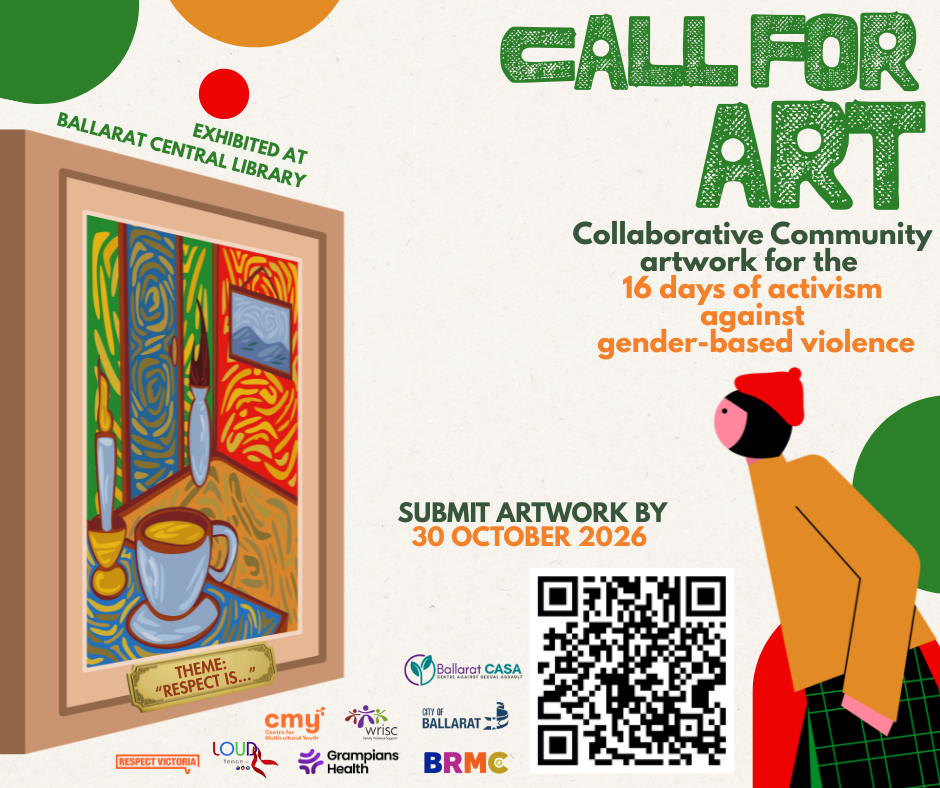
16 days of activism 2026 - Call for Art

On behalf of the Ballarat Centre Against Sexual Assault (CASA), we would like to share this Call for Art invitation with our school communities. This invitation is open to all students, teaching staff, and administrative staff residing in Ballarat and surrounding areas, as well as those outside Ballarat.

The theme of the exhibition is "Respect Is..." Community Collaborative Artwork. Selected artworks will be exhibited at the Ballarat Central Library as part of this year's 16 Days of Activism Against Gender-Based Violence Art Exhibition.

Artists and community members of all ages and abilities are invited to contribute a 20cm x 20cm artwork on cardboard or paper, responding to the theme: Respect Is...

Individual artworks will be displayed together as part of a larger collaborative community installation.

Blank cardboard 20cm x 20cm squares are available from Ballarat CASA, WRISC, and the Ballarat Central Library. Alternatively, participants can create their artwork on their own paper or card at home, provided it measures 20cm x 20cm. A paper or online consent form must be completed with each submission.

Digital artwork in the same dimensions can be uploaded when completing an online consent form.

Attached you'll find:

  • 16 Days Call for Art Poster
  • 16 Days Collaborative Artwork Information & Consent Form

If you require printed copies of the poster or consent form, please contact us at casa@gh.org.au.

16 Days Collaborative Artwork Information & Consent Form

16 Days Call for Art Poster

16 September 2026 / Weekly Newsletter #111

Catholic Identity and Mission

Priority courses for 2027 – Sponsorship applications now open

DOBCEL has identified the priority professional learning courses for 2026, with links and flyers now available online. These courses support teachers and leaders in meeting the VCEA Accreditation Policy requirements, particularly Level 2 Accreditation for those teaching Religion or holding leadership positions (a must if adjunct ‘principal’ with a title).

The courses provide valuable opportunities for theological reflection, formation, and deeper engagement with the Catholic tradition. Sponsorship is available, with enquiries and applications to be directed to sponsorship@dobcel.catholic.edu.au.

Applications close Friday 23 October 2026.


CTC/YTU Graduate Certificate in Teaching Religious Education

Year 1 (Those commencing in 2027)
Semester 1
BS8610Z: Introduction to the Bible for Teachers: Bro Paul Creevey
Dates: Saturdays, 6 March, 20 March, 1 May, 15 May 

Semester 2
CT8620Z: Introduction to Theology for Teachers: Bro Paul Creevey
Dates: Saturdays, 7 August, 21 August, 4 September, 9 October
 

Year 2 (Those continuing in 2027)
Semester 1
DT8630Z: Introduction to Moral Theology for Teachers: Bernard Teo
Dates: Saturdays, 27 February, 13 March, 1 May, 15 May 

Semester 2
DR8640Z: Introduction to Religious Education for Teachers: John Meneely
Dates: Saturdays, 31 July, 14 August, 4 September, 9 October


ACU Graduate Certificate in Religious Education (GCRE)


Year 1 (Those commencing in 2027)
Semester 1
THBS562 Introducing the Scriptures | TBA

Semester 2
THCT563 Introducing Theology | TBA

Year 2 (Those completing in 2027)
The following units are being offered in 2027 as online synchronous (with weekly classes):
Semester 1
THCT564 Introducing Church Life | ACU Online MT 

Semester 2
EDRE544 Change and Continuity in Religious Education | ACU Online MT

Or
For those who prefer a face-to-face option, similar units are offered in Melbourne on 4 Saturdays per subject (2 days at ACU Melbourne and 2 days online) TBA

For more information, visit our Sponsorship page on the DOBCEL website or contact Kate Lawry at 0428359854.

16 September 2026 / Weekly Newsletter #111

Wellbeing

Understanding and nurturing the social and emotional wellbeing of Indigenous students through an Indigenous lens (Tuesday, 22 September, 4pm - 5pm AEST)

Explore wellbeing through an Indigenous lens and deepen your understanding of the factors that support Indigenous students to thrive with Dr Justin Wilkey, a Ngarrindjeri man and researcher specialising in Indigenous Education and Wellbeing in the Faculty of Education at the University of Melbourne.    

Drawing on research, professional experience and PhD findings, Justin will introduce key concepts of Indigenous social and emotional wellbeing (SEWB), including the Indigenous SEWB model, protective and risk factors, and the ongoing impacts of colonial systems and racism on wellbeing outcomes.    

Practical strategies linked to the AITSL Professional Standards and the Aboriginal and Torres Strait Islander Histories and Cultures cross-curriculum priority will be shared, along with resources and opportunities for questions and reflection.

Register Here

Registration for student wellbeing networks - now open

Registrations for the Term 4 Student Wellbeing Networks are now open. We warmly invite Mental Health and Wellbeing Leaders (MHWLs), Student Wellbeing Leaders, and any other interested staff to attend.

To provide flexibility across the Diocese, staff are welcome to register for whichever date and venue suits best, regardless of school location.

The networks provide an opportunity to connect with colleagues, share good practice, stay informed about current wellbeing initiatives, and engage in professional learning and discussion.

Please find the registration details below and register for your preferred session.

Mid- North Tuesday, 20 October 2026 | 10am-2pm
Horsham Catholic Education Service Centre
6A McLachlan Street Horsham
Register here

Central Wednesday, 21 October 2026 | 9.30am-3pm
Siena Primary School, Lucas
Please email Jane Bennett to register your attendance

South Thursday, 22 October 2026 | 9.30am-2.30pm
Warrnambool Catholic Education Office, 
92a Liebig Street
Register here

North Thursday, 22 October 2026 | 10am-2.30pm
St. Mary’s P.S. Sea Lake
Register here

Secondary Thursday, 12 November 9:30am
St. Brigid’s College Horsham
Register here

16 September 2026 / Weekly Newsletter #111

People and Development

2026 Professional Learning

Be sure to check the DOBCEL 2026 Professional Learning Guide for September!

We encourage all team members to review the learning guide and invite team members to explore the many opportunities available for professional growth and collaboration in 2026.

Professional Learning Guide V3.9 (updated as of 14 September 2026)

2027 Professional Learning Guide – first release now available!

We’re pleased to share the first version of the 2027 Professional Learning and Events Guide, featuring a wide range of professional learning programs, events, and networks for all DOBCEL team members across our schools and offices.

Schools are encouraged to share the guide widely so all team members can explore upcoming opportunities. Updated versions will be released as new programs are added or details change.

In the coming weeks, events will be added and available on the PL Program and Calendar page on the DOBCEL website for easy registration where events are utilising the TryBooking platform. Please check dates, times, and venues before booking.

DOBCEL Professional Learning and Events Guide 2027

People and Development - professional learning opportunities - Term 3 and Term 4

The following people and development professional learning opportunities are available for staff to attend:

DateCourseDetailsTrybooking Link
Monday 12 October 
10.30am – 12.30pm
Online (free)
Leave EntitlementsClick here for details

https://www.trybooking.com/DITAP

Please contact Jo Huntley or Vicki Dekker for more information

Tuesday 20 October 
3.30pm – 4.30pm
Online (free)
Crucial Conversations: Refresher #2Click here for details

https://www.trybooking.com/DGZIN

Please contact Emma Baldwin or Fiona Murphy for more information

Wednesday 21 October 
2.30pm – 3.30pm
Online (free)
Deputy and Assistant Principal and Senior Leader network #4 VCClick here for details

https://www.trybooking.com/DGWCA

Please contact Fiona Murphy or Janet Claassen for more information

Thursday 5 November
10am – 12 noon
Online (free)
Staff Related Injury ManagementClick here for details

https://www.trybooking.com/DOQOR

Please contact Leah Crough or Vicki Dekker for more information

Tuesday 10 November 
3.30pm – 4.30pm
Online (free)
Mastering the Art: Performance Development Review’s #2Click here for details

https://www.trybooking.com/DGZBT

Please contact Fiona Murphy for more information

11-12 November
9am – 4pm 
(Both days)
Face to Face
($500 per participant)
Crucial Conversations: Ballarat #2Click here for details

https://www.trybooking.com/DGQLV

Please contact Emma Baldwin or Fiona Murphy for more information

Wednesday 11 November
2:15pm – 3:15pm 
Online (free)
ECT: 2026 1st Years Term 4Click here for details

https://www.trybooking.com/DGUDN

Please contact Julie Cooper or James Murphy for more information

Thursday 26 November 
2:15pm – 3:15pm
Online (free)
ECT: 2026 2/3 Years Term 4Click here for details

https://www.trybooking.com/DGUFG

Please contact Julie Cooper or James Murphy for more information

Professional Learning Opportunity 

Crucial Conversations- DOBCEL facilitated

Date, Time and Location11-12 November 2026
9am – 4pm (Both days)
Face to Face – Sovereign Park, Ballarat
Program Overview

Crucial Conversations teaches a practical model for effective communication, especially in difficult or high-stakes situations. It focuses on managing emotions, fostering respectful dialogue, and achieving mutual understanding to strengthen relationships and drive positive outcomes. This program is ideal for anyone looking to improve their skills in giving feedback and promoting open, constructive conversations—with colleagues, parents, carers, and the wider community.

Learning Outcomes:

  • Understand the Crucial Conversations model.
  • Build skills in giving feedback and encouraging open dialogue.
  • Apply these skills in conversations with colleagues, parents, and the community
Target Audience
  • Current people leaders in both schools and CEB offices
  • Suitable for all DOBCEL team members at all levels to attend
Booking Linkhttps://www.trybooking.com/DGQLV
Cost$500 per participant

For more information, please contact Emma Baldwin

16 September 2026 / Weekly Newsletter #111

Learning and Teaching

PAT resources on the DOBCEL schools hub

As you and your teams prepare for the administration of PAT at the start of term 4 this is a reminder that in the DOBCEL Schools Hub you will find a series of previous webinars which will explain the available resources for administration, tools for recording the data and analysis of the data.

If you have any queries, please contact:
● Belinda Chiswell: bchiswell@dobcel.catholic.edu.au
● Teresa Hadden: thadden@dobcel.catholic.edu.au
● Melanie Saleta: msaleta@dobcel.catholic.edu.au

Terms 3 & 4 ACER’s PAT webinars

With term 4 quickly approaching please make note of the upcoming webinars being presented by ACER about the administration and analysis of PAT data:

Link to outline of upcoming webinars

  • PAT Interview – conversations with schools using PAT – best-practice recommendations for effective administration 
    Wednesday, 16 September, 4pm
  • Getting the most from PAT: Best practice, assessment advice and updates 
    Tuesday, 13 October, 4pm 
  • PAT Interviews: Conversations with schools using PAT – what next?
    Wednesday, 28 October, 4pm

16 September 2026 / Weekly Newsletter #111

Flare

Congratulations to OLSH Merbein!

The Flare team is extremely proud to announce that Our Lady of the Sacred Heart, Merbein is now an accredited Flare Lighthouse school. 

Completion of the Lighthouse self-accreditation process marks a significant milestone in a school’s Literacy improvement journey. To reach this point, schools must have implemented all three phases of the Flare Professional Learning Syllabus and engaged in a rigorous audit of their Literacy practices. The process supports schools to demonstrate evidence of high-quality pedagogy, strategic leadership, data-informed intervention, and consistency of practice across all aspects of Literacy from Foundation to Year Six. 

Flare Lighthouse schools join a growing network committed to continuous improvement, collaborative learning, and sustained excellence in Literacy outcomes. We know you will all join us in congratulating Narelle, Cheryl-Anne and the teachers, LSOs and students of Our Lady of the Sacred Heart on this wonderful achievement. 

Term 4 Registrations now due - find registration forms here.

  • Phase B Leaders' Network: Friday 9th October 9.45am - 3pm 
    (following La Trobe Focus Group at 9am)
     
  • Phase C Leaders' Network: Friday 16th October 9.45am - 3pm
    (following La Trobe Focus Group at 9am)
     
  • Aurora Network: Friday 23rd October 1pm - 3.30pm
     
  • Phase C Day 2: Wednesday 4th November 9am - 3pm Online
     
  • Phase A Day 2: Friday 4th December 9am - 3pm Online

Arrangements for the Term 4 Lighthouse Network will be made via email.

16 September 2026 / Weekly Newsletter #111

SIMON travelling roadshow

Please join SIMON as we host two roadshows in the Ballarat region this October. 

These roadshows will see us visit a number of regions to showcase key SIMON functionality - both existing features and exciting new developments. Most importantly, they will provide an opportunity for meaningful, face-to-face engagement with our schools.

The SIMON Roadshow is designed to teach you more about SIMON in a relaxed environment. Topics are relevant to both Primary and Secondary Schools.

The structure of the day is as follows (including breakout sessions).

Session 1               10am-12 noon
Lunch Break          12nn-12.30pm     
Session 2               12.30pm-2pm          

Topics Covered (but not limited to)

  • Configuring student notes
  • Overdue work letters
  • Heartbeat/student digest
  • Social behaviour and pastoral chains
  • Rollover – End of Year
  • New student enrolments (incoming) and communication centre
  • SIMON administration system

Thank you to the following schools for hosting the SIMON roadshow.

To register for one of these exciting free events, choose the location that suits you best and click on the trybooking link.

9 October             St Joseph's College, Mildura                     https://www.trybooking.com/DOMCX
21 October           Trinity College, Colac                                https://www.trybooking.com/DOLVV

16 September 2026 / Weekly Newsletter #111

Career opportunities

To view current vacancies and learn more about career opportunities with DOBCEL, please visit our Careers Page and Teachers on Net via the links below.

>

Careers @ DOBCEL

Teachers on Net

16 September 2026 / Weekly Newsletter #111

Quick Links

DS2035 – Stay connected to the Strategy

  • Listen to the podcast - Towards 2035
  • DOBCEL Strategy 2035 – Full Document (PDF)
  • Strategy Portal – Resources, videos, and key messages
  • CIRP Page – Details and application form
  • Canvas for Student Agency - Resources and recordings from the Student Agency sessions
  • Collaborative Cultures

Catholic Identity & Mission

  • Fully Funded Priority Courses for Accreditation 2027 

Wellbeing

  • Resources to support young people’s body positivity

Learning & Teaching

  • EAL Professional Learning
  • Primary Leaders of Learning Network – Register now for Term 4

People & Development

  • Professional Learning Guide
  • Staff Wellbeing Guide & Resources
  • Leadership Competency Framework
logo


03 4344 4350


200 Gillies St North, 
Lake Wendouree VIC 3350
 

Contact Us

Acknowledgement of Country

Catholic Education Ballarat acknowledges respectfully the Traditional Custodians of the lands on which we live and work. We pay our respects to their Elders, past and present, and extend that respect to all Aboriginal and Torres Strait Islander peoples on this land.


dobcel.catholic.edu.au uses Google Analytics

© Copyright 2026 JWAM DNA College

Site Design by